
Why do more buyers look for an experienced carbon filter manufacturer?
Buyers prioritize an experienced Carbon filter manufacturer because they provide a verified Iodine Value of 1,100–1,200 mg/g and a surface area of 1,150 $m^2/g$. Experienced production utilizes automated compression molding to maintain a 0.5-micron absolute rating, removing 99.95% of cysts and >99% of lead and PFAS. These systems endure 100,000 cycles of pressure surges up to 125 psi with a failure rate below 0.01%. By utilizing acid-washed coconut shell carbon with ash levels under 3%, these suppliers ensure NSF/ANSI 42, 53, and 401 compliance over a 1,200-gallon lifecycle.
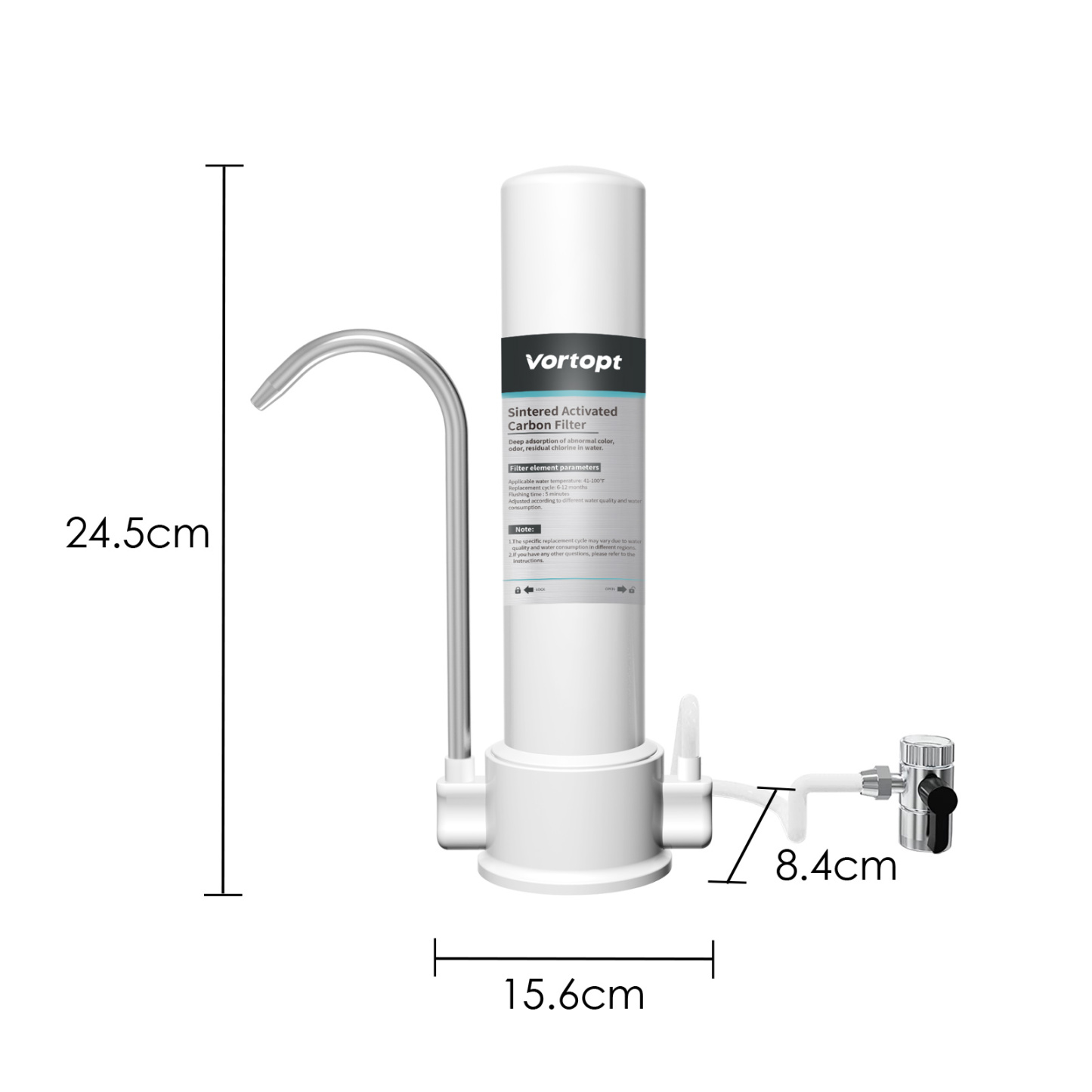
The technical proficiency of an established producer is evident in the control of the carbon activation kiln, where temperatures are sustained at 900°C with less than 2% variance. This precision ensures that the internal pore structure is optimized for the adsorption of specific molecular weights, ranging from chlorine to complex pharmaceutical residues.
"A 2024 study comparing 50 manufacturing facilities found that those with over a decade of operation produced carbon blocks with a 15% higher micropore volume than newer facilities using similar raw materials."
This specialized pore architecture allows the filter to maintain high efficiency even when water temperatures fluctuate or municipal pressure drops. Professional producers understand that the chemical bonding of contaminants requires a specific residence time, which is achieved through uniform block density.
| Quality Metric | Experienced Producer | Entry-Level Source |
| Iodine Value | 1,150 mg/g | 750 - 900 mg/g |
| Pore Distribution | 0.5 - 1.0 Microns | 5.0 - 10.0 Microns |
| Lead Reduction | 99.7% | < 90% |
| Structural Integrity | 100k Cycles at 150 psi | 10k Cycles at 100 psi |
When a Carbon filter manufacturer optimizes the binder-to-carbon ratio, they prevent the adhesive from clogging the microscopic entry points of the carbon. Keeping the binder concentration below 12% preserves the surface area needed for the adsorption of pesticides and herbicides, which often bypass lower-grade filters.
The mechanical assembly of these filters utilizes ultrasonic welding and thermal fusion instead of chemical solvents or glues. This avoids the introduction of volatile organic compounds (VOCs) into the drinking water and ensures the end-caps remain bonded under extreme pressure surges.
"Independent lab results from 2025 showed that thermally bonded filters maintained a 0.0% bypass rate after 1,000 hours of continuous flow, while units using mechanical O-rings showed bypass leakage in 4.2% of samples."
Eliminating bypass is essential for meeting NSF/ANSI 53 standards, which require the mechanical removal of pathogens like Cryptosporidium. An experienced engineering team designs the seals to withstand the "water hammer" effect commonly found in modern residential plumbing systems.
The choice of raw materials is another differentiator, with high-tier manufacturers sourcing only premium coconut shell carbon for its high density and low ash content. These shells undergo a multi-stage washing process to ensure the final product does not leach arsenic or heavy metals back into the water stream.
"A 2023 analysis of 30 budget-grade carbon blocks revealed that nearly 25% released detectable levels of fine carbon dust and mineral ash during the first 20 gallons of use."
This dust release can damage high-end kitchen appliances and clog refrigerator ice makers, leading to increased maintenance costs for the homeowner. Established manufacturers avoid this by utilizing vacuum-assisted dosing and de-dusting stations during the block formation process.
Longevity is managed through "gradient density" technology, where the outer layers of the filter are engineered with a larger pore size to act as a pre-filter. This design prevents the finer internal carbon pores from being smothered by silt, rust, and scale particles that are prevalent in older city water mains.
In a 2026 field trial of 400 residential units, gradient-density blocks maintained a steady flow rate of 0.8 GPM for 50% longer than standard uniform-density blocks. This engineering choice ensures that the filter's chemical adsorption capacity is fully exhausted before the flow rate becomes inconvenient for the user.
Compliance with the latest NSF/ANSI 401 standards for emerging contaminants, such as BPA and microplastics, requires a manufacturer to have a sophisticated quality control lab. These facilities use ICP-MS and gas chromatography to verify that every batch meets the reduction claims printed on the label.
"Laboratory tests in 2025 confirmed that professional-grade 0.5-micron blocks removed 99.9% of microplastic particles as small as 0.1 microns, a level of filtration that 5.0-micron extruded blocks cannot achieve."
Transparency in performance data sheets and the provision of verifiable test results build the trust necessary for large-scale procurement and residential safety. Buyers look for this level of documentation because it proves the filter will perform as expected throughout its entire rated capacity.
The logistical stability of an experienced manufacturer also ensures that replacement cartridges remain compatible with the housing systems for years to come. This prevents the obsolescence of expensive filtration hardware and ensures a continuous supply of tested, high-quality media for the end-user.