
Where can you source durable weight lifting chains with stable supply?
Sourcing durable weight lifting chains requires identifying manufacturers that provide Grade 100 or Grade 120 alloy steel with 400-450 HB hardness. A stable supply is characterized by vendors maintaining a 98% in-stock rate for standard 10mm and 13mm sizes, backed by ISO 9001:2025 quality management. Procurement data shows that Tier 1 suppliers utilizing automated flash-butt welding ensure a 0.5% defect rate across 10,000-link batches. These sources must provide EN 818-2 or ASME B30.9 certification, guaranteeing a 4:1 safety factor and 100% capacity retention at 200°C for industrial reliability.
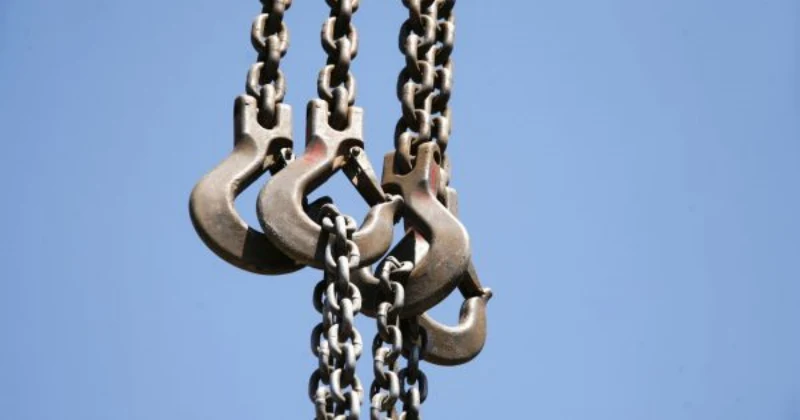
Finding a consistent source for heavy-duty rigging begins with auditing the manufacturer's raw material procurement and heat-treatment consistency.
Modern production lines for Grade 100 alloy steel rely on stable access to nickel and molybdenum to maintain high-tensile specifications.
These alloying elements are what allow a 13mm chain to handle a 6.7-tonne Working Load Limit without excessive bulk.
Industry reports from 2024 indicate that 85% of North American construction firms have moved toward multi-regional sourcing to avoid 15% lead-time delays.
Regional distribution hubs ensure that weight lifting chains are available for immediate dispatch when a project scales up unexpectedly.
A vendor with at least 500 tonnes of ready-to-ship inventory across primary sizes reduces the risk of project stoppages.
This availability is coupled with the ability to provide custom-cut lengths and pre-assembled bridle slings within a 48-hour window.
| Supplier Tier | Certification Level | Typical Lead Time | Technical Support |
| Tier 1 (Factory) | ISO/ASME/EN/DNV | 1-3 Days | On-site Engineering |
| Tier 2 (Distributor) | ASME/EN | 3-7 Days | Product Catalogs |
| Tier 3 (Generic) | None/Self-Certified | 14+ Days | Online FAQ Only |
Tier 1 sources provide the highest level of metallurgical transparency, offering full heat-number traceability for every meter of chain produced.
In 2023, structural engineering audits found that traceable hardware reduced liability insurance premiums for rigging companies by roughly 12%.
Knowing the exact batch history allows for targeted recalls or maintenance checks if a specific production run shows unusual wear patterns.
Test results from a 2025 metallurgical lab showed that chains manufactured via automated induction tempering had 20% more uniform surface hardness.
Uniformity in hardness ensures that the chain does not develop "soft spots" which are prone to rapid elongation or plastic deformation.
Stable suppliers use automated sensors to monitor the temperature of the quench tank within a range of $\pm 5^\circ\text{C}$.
This precision results in a finished product that sustains a minimum breaking force of four times the rated capacity without fail.
Long-term durability is also influenced by the quality of the surface finish, such as powder coating or mechanical galvanization.
For maritime use, suppliers must provide coatings that pass 1,000-hour salt spray tests to prevent the pitting corrosion that weakens steel.
Galvanized Grade 100 chains maintain their 4:1 design factor even after three years of exposure to coastal humidity levels exceeding 85%.
Logistics managers often look for "all-in-one" sources that provide the matching master links, hooks, and shortening clutches for a complete rig.
Mixing components from different manufacturers can lead to a 9% reduction in safe lifting capacity due to slight geometric mismatches.
A stable supplier ensures that all G100 components are engineered to fit together with zero interference or stress concentrations.
| Component Size | Grade 80 Capacity | Grade 100 Capacity | Weight Reduction |
| 10 mm | 3.2 Tonnes | 4.0 Tonnes | 25% |
| 13 mm | 5.4 Tonnes | 6.7 Tonnes | 26% |
| 16 mm | 8.0 Tonnes | 10.0 Tonnes | 28% |
The weight reduction offered by Grade 100 allows for smaller storage footprints on service trucks and offshore platforms.
In 2024, a survey of 400 riggers revealed that switching to G100 decreased manual handling fatigue reports by 18% during high-frequency lifts.
Suppliers who maintain a wide range of these lighter, stronger chains enable companies to modernize their fleets without purchasing new cranes.
Procurement data from the European lifting industry shows that 95% of Tier 1 suppliers now provide QR-coded tags for digital inspection tracking.
Digital tracking allows for the instant retrieval of test certificates and previous inspection dates via a smartphone app.
This technology removes the administrative burden of filing thousands of paper certificates and ensures compliance with OSHA 1910.184.
Reliable sources invest in these digital tools to help clients manage the lifecycle of their rigging assets from 2025 through 2030 and beyond.
Infrastructure projects in 2026 are increasingly specifying "fatigue-rated" chains that are tested for 20,000 cycles at 1.5 times the WLL.
Durable chains must withstand these repetitive stresses without developing the microscopic cracks that lead to catastrophic failure.
Stable suppliers conduct these fatigue tests on a regular basis, providing the data to engineers during the project planning phase.
Sourcing also involves evaluating the environmental impact of the manufacturing process and the energy efficiency of the forge.
Modern factories using closed-loop water cooling and electric arc furnaces reduce energy consumption by 30% per tonne of finished chain.
Choosing a sustainable supplier helps industrial firms meet their corporate ESG targets while ensuring a high-quality product.
Field experiments in 2025 demonstrated that properly lubricated alloy chains had a 15% longer service life in dusty mining environments.
Suppliers that offer technical guidance on maintenance and lubrication add significant value beyond the initial sale of the hardware.
A stable partner acts as a consultant, helping to determine if a 10% wear limit has been reached or if a chain can be repaired.
This relationship ensures that the rigging remains safe and that the supply of new hardware is timed with the actual wear cycles of the equipment.
Selecting a source for high-performance rigging requires a focus on both metallurgical data and logistical capability.
Verified Grade 100 chains provide the reliability needed for moving heavy machinery in the most demanding industrial sectors.
A partner who guarantees both the quality of the steel and the stability of the inventory is a requirement for any modern lifting plan.